Documented data product
Commercial API Platform
A governed property-data API product with public documentation, scoped access, quotas, caching, subscriptions and operator visibility.
- My role
- API product implementation and operations
- Status
- Live documentation · verified staging console
Context
The system behind the screenshot.
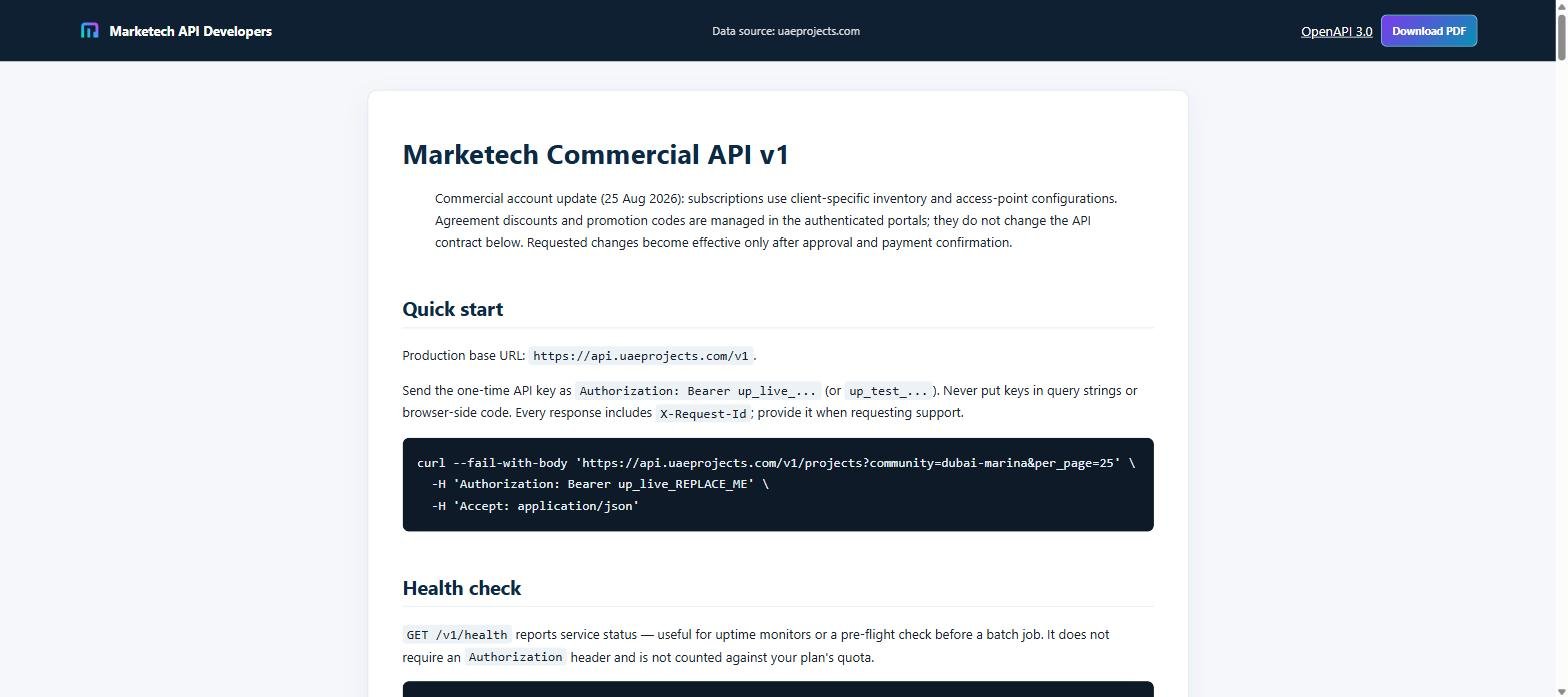
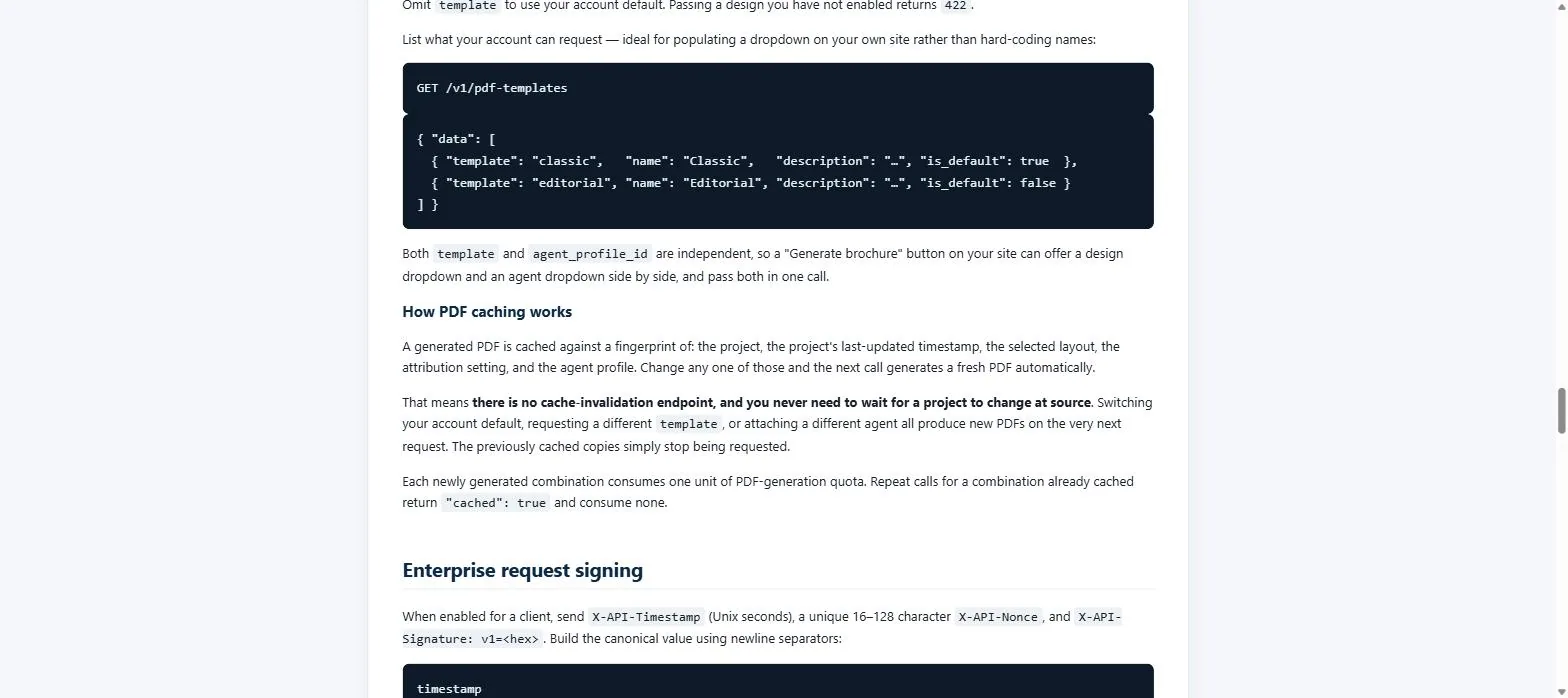
The public Marketech Commercial API documentation exposes a versioned property-data contract, while the management console handles the commercial and operational side of access.
The result is more than a set of endpoints: documentation, authentication, scopes, quotas, subscriptions, usage and security monitoring form one product system.
Reality first
The problem
A public data endpoint is easy to expose and difficult to operate responsibly. Client access needs clear contracts, controlled permissions, predictable limits and evidence when usage or abuse requires attention.
Developers need implementation detail while operators need pricing, subscriptions, keys, usage and security visibility without exposing private client information publicly.
Constraints
- Public documentation must remain accurate for developer use
- Client access requires authentication and scoped permissions
- Quotas and rate behavior must be explicit and measurable
- Caching must reduce repeat delivery without creating stale contracts
- Operator screens contain private client and security data
- Staging evidence must be labeled honestly rather than presented as production
My role
Public documentation and privacy-reviewed staging screens provide the evidence. No authenticated client endpoint was tested during the research pass.
- API product and documentation delivery
- Access-control and usage-policy implementation
- Management-console operations
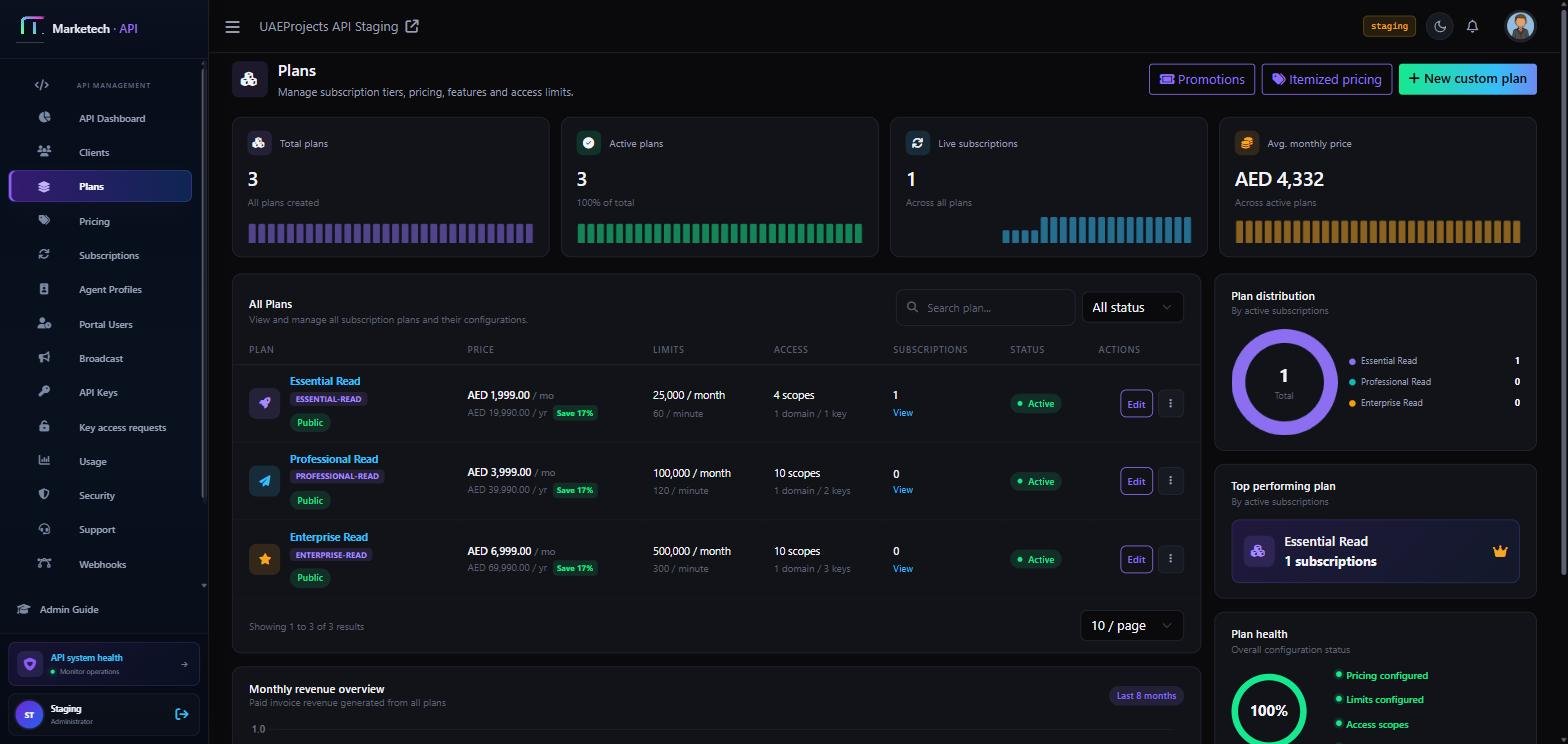
- Plans, quotas and subscription structure
- Caching, request signing and delivery behavior
System architecture
Developer access with operator control
Requests move through authentication and scope checks before resource delivery, while caching, quota accounting and operational monitoring protect the product around that path.
- 01Client application
- 02Authentication & scopes
- 03Versioned REST resources
- 04Cache & quota policy
- 05Usage & security oversight
Implementation
What was built.
Feature groups are kept specific to the system instead of repeating a generic services list.
Developer layer
- OpenAPI-linked documentation
- Quick-start requests
- Endpoint and permission tables
- Health endpoint
Access layer
- Bearer API keys
- Test and live environments
- Scoped permissions
- Enterprise request signing
Commercial layer
- Subscription plans
- Monthly quotas
- Rate limits
- Plan-dependent overage behavior
Operations layer
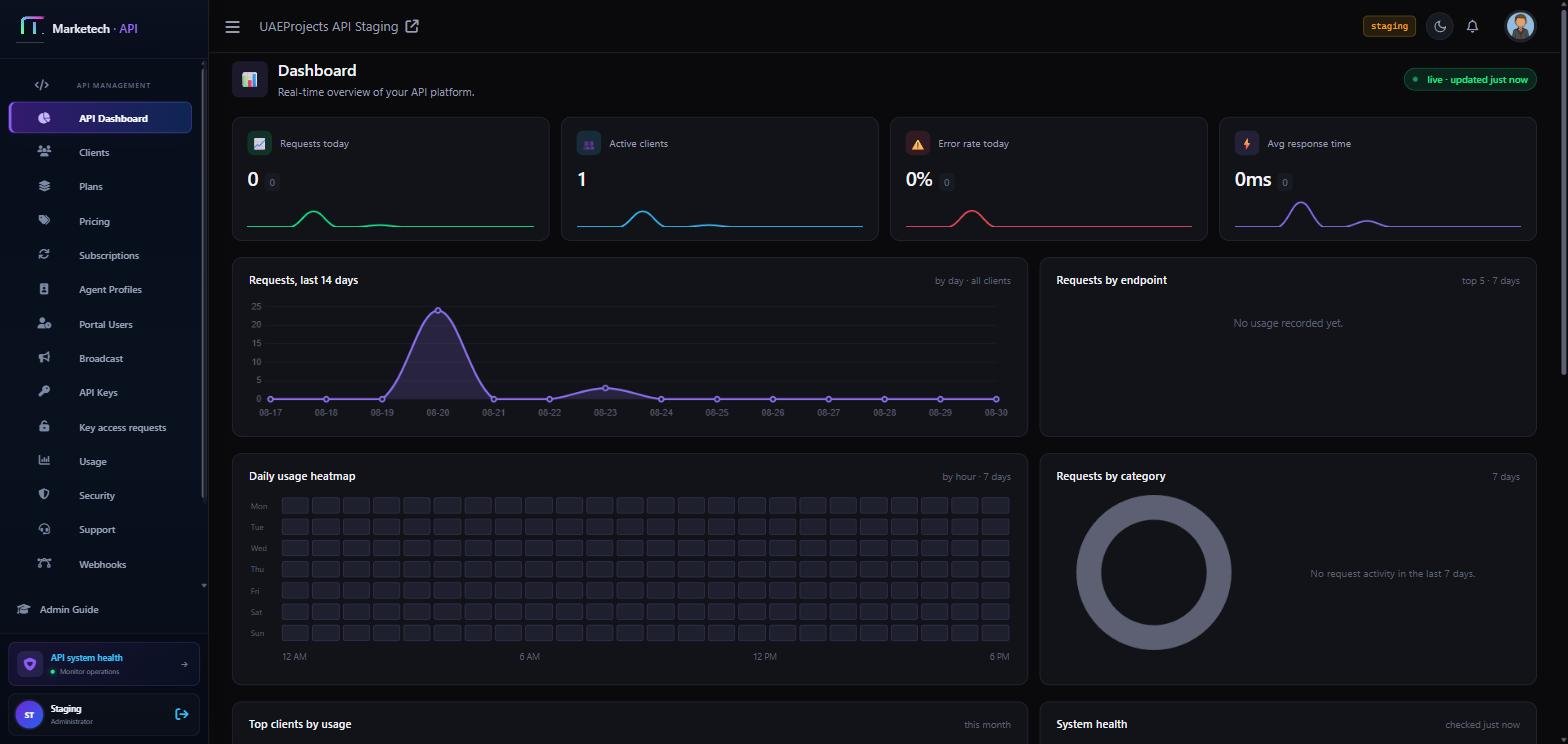
- Usage dashboards
- Response-time and error views
- Key lifecycle controls
- Security and abuse monitoring
Progressive disclosureTechnical details
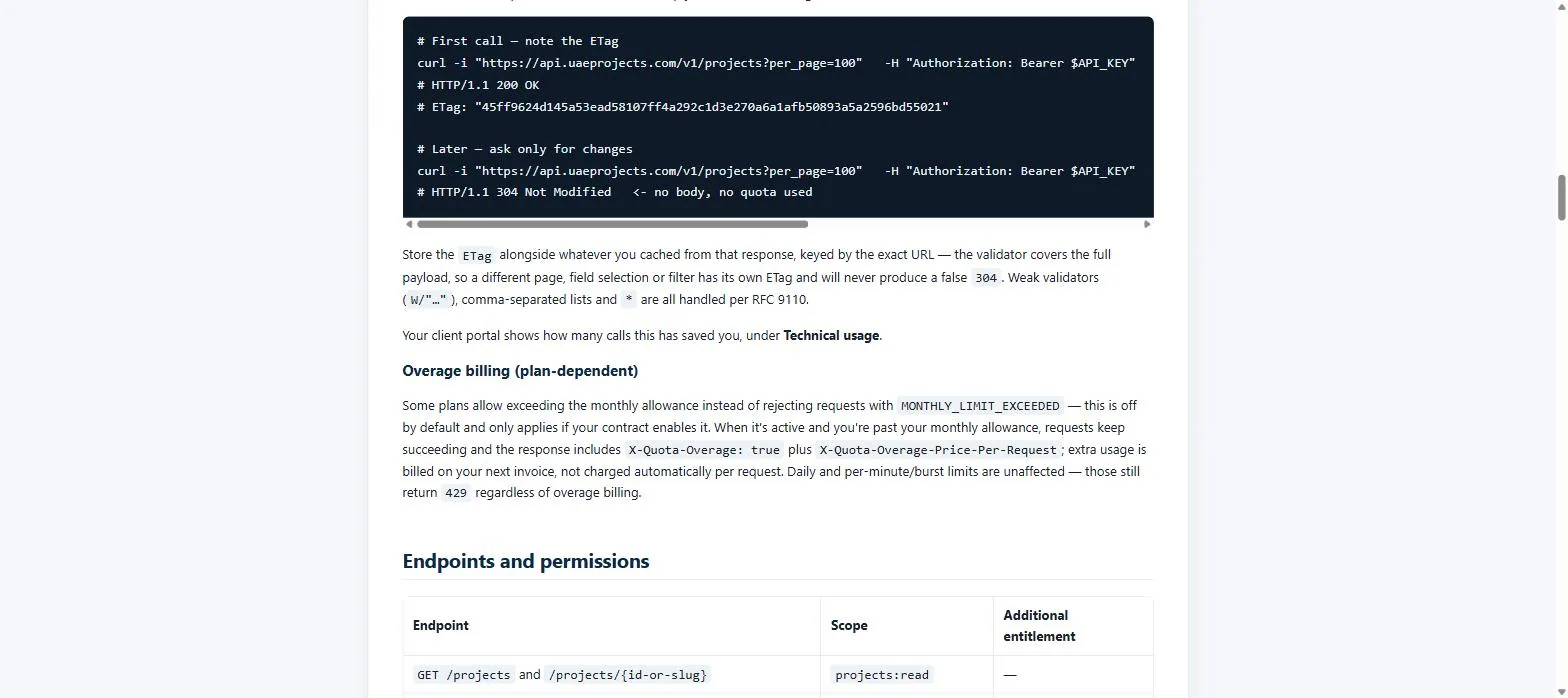
ETag-aware delivery
Conditional requests can return 304 Not Modified when the client already holds the current representation. The documented behavior avoids consuming quota for that repeat response.
Scoped contracts
Endpoint access is tied to explicit permissions so a client receives only the resources included in its entitlement.
Signed enterprise requests
Timestamp, nonce and signature headers add replay-aware request verification for enabled clients without exposing signing material in public examples.
Deterministic PDF caching
Generated brochure output is documented as a fingerprint of project state, layout and agent configuration, so a meaningful input change produces a new result.
Quality system
Testing is part of the build.
Checks focus on real failure modes, evidence boundaries and the public experience after deployment.
Documentation contract
Verify base URLs, authentication headers, request identifiers and endpoint permissions against the public documentation.
Cache semantics
Review the documented first-response ETag and repeat-request 304 path, including its quota behavior.
Limit behavior
Check documented monthly-limit, daily-limit, burst-limit and plan-dependent overage responses as separate cases.
Request signing
Review timestamp, nonce, signature format and canonical signing-string requirements without publishing a real secret.
Operator evidence
Use only privacy-reviewed staging dashboard and plan screens; exclude client, key and IP-bearing views.
Problem → system
What changed in the operating model.
Raw data access with no commercial boundary
Plans, scopes, quotas and explicit request behavior
Repeat delivery consuming unnecessary bandwidth and quota
ETag-based conditional caching with documented 304 behavior
Developer access separated from operational oversight
Public docs connected to usage, plan and security management
Evidence-backed
Outcomes
A documented commercial API with developer-facing contracts and an operator-facing management layer.
- 01
A public developer documentation experience for a versioned commercial API
- 02
A governed access model with keys, scopes, limits and subscription plans
- 03
Documented caching, PDF delivery and signed-request behavior
- 04
A staging management console for usage, commercial and security operations
Honest reflection
Lessons carried forward.
An API becomes a product when access, documentation, billing rules and operational visibility are designed together.
Cache behavior must be part of the contract; otherwise clients cannot use it safely or predictably.
Strong technical proof can be shown without publishing secrets, client identities or security-event details.
Next system
Need something similar?
Bring the business problem. We can map the workflow, architecture, build and verification plan from there.