LeadCenter · Multi-site CRM
Lead Management Systems
LeadCenter is a live internal platform that brings enquiries from multiple websites into one operational view for filtering, review and aggregate reporting.
- My role
- Developer / System Builder
- Status
- Live internal system · sanitized public proof
Context
The system behind the screenshot.
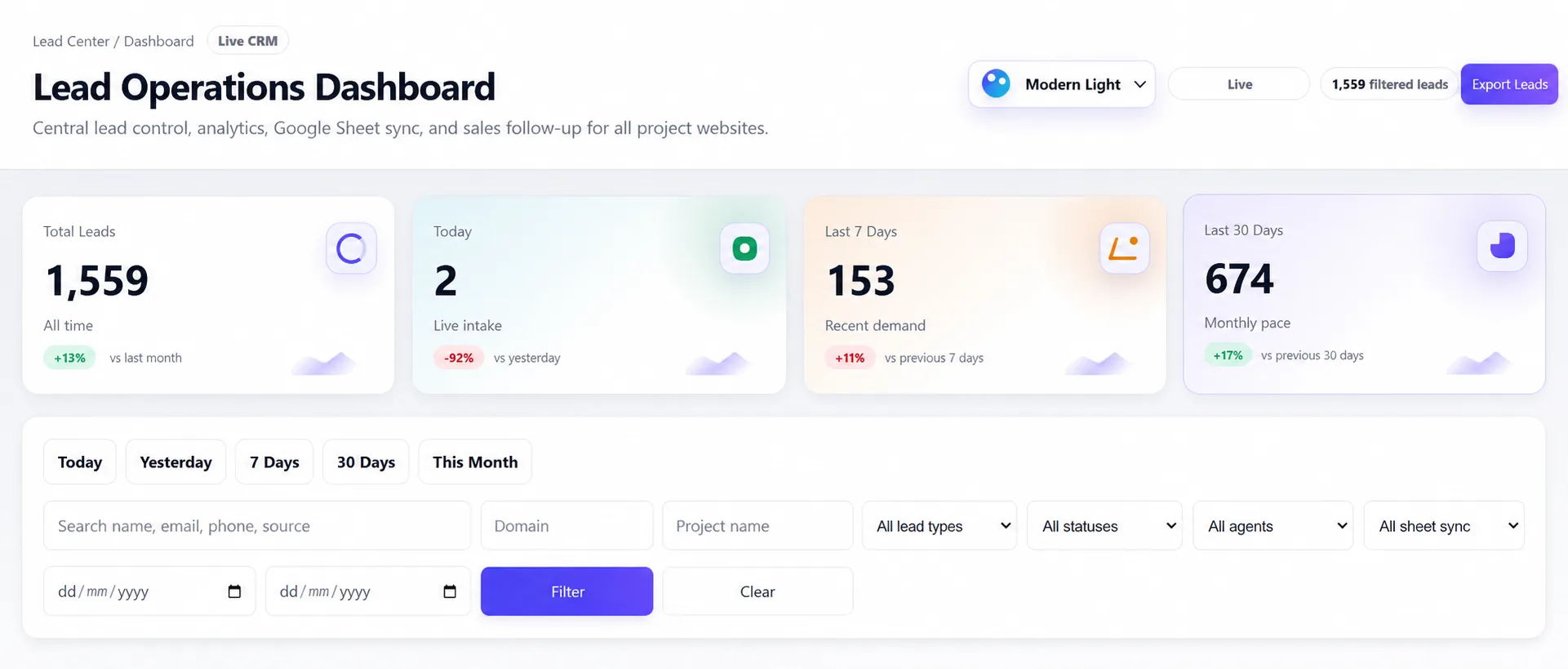
LeadCenter sits behind multiple website enquiry paths and gives operations one place to review intake, filter activity and understand aggregate lead patterns.
The live interface contains private contacts, source domains, users and infrastructure details. Public proof therefore uses two tightly sanitized derivatives that retain the real product architecture without publishing those records.
Reality first
The problem
Leads arriving from many independent websites become difficult to review when source context, statuses, assignments and reporting are fragmented across separate tools.
Operations needs a central view that supports day-to-day filtering and reporting while keeping every underlying record private and accountable.
Constraints
- Lead records contain names, phone numbers, emails and enquiry details
- Source websites and campaign domains are operationally private
- User, assignment and integration data cannot enter public proof
- Multiple acquisition sources need consistent filtering and context
- Aggregate reporting must remain useful without exposing individual records
- The public portfolio cannot link to or identify the internal application host
My role
LeadCenter is a user-confirmed Rana Usman development project. The public evidence uses sanitized derivatives only; the live application, records and infrastructure remain private and unchanged.
- Multi-site lead aggregation and operational dashboard development
- Search, date, source, project, type, status and assignment filters
- Status, assignment and sheet-sync visibility
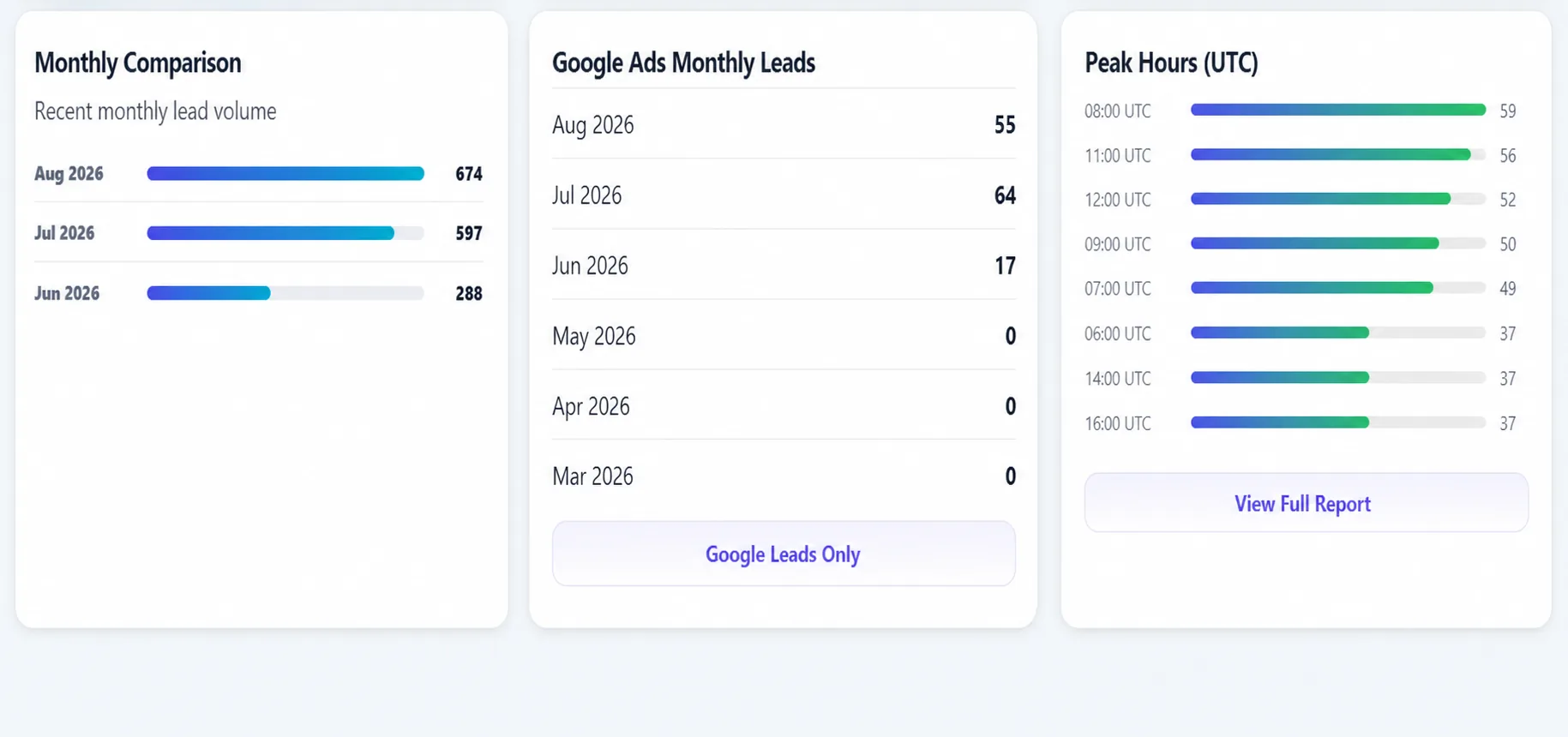
- Aggregate analytics and monthly reporting views
- Bulk-action recovery and day-to-day operational safeguards
System architecture
From multiple websites to one operating view
LeadCenter aggregates website enquiries, keeps source and workflow context available internally, and provides filtering, assignment and reporting controls in one operational layer.
- 01Multiple websites
- 02Lead capture
- 03LeadCenter
- 04Filtering & assignment
- 05Reporting & operations
LeadCenter manages lead aggregation and operations. It is not presented as the separate future website-control platform described in the multi-site operations case study.
Implementation
What was built.
Feature groups are kept specific to the system instead of repeating a generic services list.
Intake
- Multiple website sources
- Lead and project context
- Type and date fields
- Sheet-sync visibility
Operations
- Search
- Source and project filters
- Status filters
- Agent and assignment views
Reporting
- Daily lead trend
- Monthly comparison
- Advertising-attributed totals
- Peak-hour view
Safeguards
- Bulk-action history
- Undo capability
- Export controls
- Operational review
Progressive disclosureTechnical details
Source continuity
The internal workflow retains source context so operations can filter and compare activity without visiting every source website independently.
Aggregate views before public proof
Monthly volumes, advertising-attributed totals and activity patterns can demonstrate reporting depth without exposing an individual lead.
Recovery as an operational feature
The observed Undo Center records bulk actions and supports recovery, adding a safeguard around high-impact CRM operations.
Privacy by publication boundary
Raw screens stay outside public assets. Only metadata-stripped crops that exclude records, sources, users and infrastructure are published.
Quality system
Testing is part of the build.
Checks focus on real failure modes, evidence boundaries and the public experience after deployment.
Filter coverage
Review the visible search, date, source, project, type, status, agent and sheet-sync controls against the verified interface.
Aggregate reporting
Compare headline totals with daily, monthly, advertising and peak-hour reporting panels in the captured evidence.
Operational recovery
Confirm bulk actions are recorded with a recoverable state in the observed Undo Center without publishing its private user fields.
Desktop privacy
Inspect every published derivative at full desktop resolution for contacts, domains, users, IDs, URLs and infrastructure details.
Mobile privacy
Verify responsive object crops cannot reveal pixels excluded from the sanitized source image.
Public-output scan
Search generated HTML, data and asset filenames for private application and source identifiers before deployment.
Problem → system
What changed in the operating model.
Enquiries reviewed across many independent websites
One centralized multi-site operating view
Lead activity difficult to compare over time
Aggregate daily, monthly, advertising and peak-hour reporting
Real proof risks exposing private records
Sanitized real interface crops with raw screens kept outside public assets
Evidence-backed
Outcomes
A centralized multi-site lead operations system with search, filters, status controls, reporting and recovery safeguards.
- 01
A live central operating view for enquiries from multiple websites
- 02
Search and filters spanning date, source, project, lead type, status, assignment and sync state
- 03
Aggregate reporting across daily activity, monthly comparisons, advertising leads and peak hours
- 04
Action-recovery safeguards for bulk CRM operations
- 05
Real public product proof without publishing private operational data
Honest reflection
Lessons carried forward.
At multi-site scale, lead source context is operational data, not only marketing attribution.
Aggregate views can prove reporting depth without turning private records into portfolio content.
Recovery controls matter when a system supports bulk actions on live operational data.
Next system
Need something similar?
Bring the business problem. We can map the workflow, architecture, build and verification plan from there.